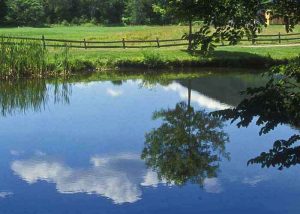
Adding pond dye colorant soon after the ice leaves your pond is a common method to make the pond water look more attractive but comes with precautions. Too much pond dye may lead to less photosynthetic oxygen production at the surface water air interface due to less light penetration. A significant gain of oxygen occurs at the thin layer of surface water when warmer water encourages phytoplankton to grow. This process might be interrupted if you overtreat the pond with dye. In the shallow littoral zone this usually isn’t a problem but as the water deepens there will be no greater gain of dissolved oxygen until macrophytes (bottom rooted plants) receive adequate sunlight to restart the process of photosynthesis.
When you color the pond water you are essentially manipulating the balance of the aquatic ecosystem:
- making the water look better is aesthetically pleasing.
- adding too much color may reduce the production of dissolved oxygen.
- primary producers and consumers need sunlight to maintain the aquatic food chain.
- If the aquatic food chain is diminished, cyanobacteria can become dominant. HABs are a real health problem.
From our experience of helping people with their ponds we notice that if you can see down into the water 16-20 inches then your pond has enough clarity to sustain productive conditions.