
Why Pond Invertebrates are the Most Reliable Water Quality Indicator You Have
Water chemistry tests give you a snapshot. Invertebrates give you history.
A biotic assessment, simply observing which invertebrates are present and in what abundance, reflects weeks or months of water quality conditions, not just what the water looked like on the morning you tested it. That is why aquatic scientists and state agencies, including the New York State Department of Environmental Conservation, use macroinvertebrate surveys as a gold-standard metric for freshwater health.
At National Pond Service, we use both tools together: lab water tests for a chemical snapshot, and invertebrate observation for the ecological story behind the numbers.
Macro vs. Micro: Understanding the Difference
Pond invertebrates fall into two categories that work together to sustain a healthy ecosystem.
Macroinvertebrates are visible to the naked eye. The larvae, nymphs, beetles, and worms you can see when you scoop a jar of pond water or sift through bottom sediment. They are the most widely used biotic indicators because they are easy to collect, sensitive to pollution, and long-lived enough to reflect cumulative conditions.
Microinvertebrates such as zooplankton such as Daphnia, copepods, and rotifers require at least a hand lens or low-power microscope to observe. They are the base of the pond food pyramid, grazing continuously on suspended algae and keeping the water clear.
How they connect to your entire pond food chain
Remove either layer and the effects cascade upward:
- Microinvertebrates (Daphnia, copepods, rotifers) graze on suspended algae and phytoplankton, keeping water clear and providing food for the next level
- Macroinvertebrates (nymphs, larvae, worms, beetles) feed on detritus, algae, and each other before becoming prey for fish
- Juvenile fish (panfish, perch, bass fry) depend on invertebrates as their primary food source during the first season of life
- Game fish (largemouth bass, walleye, trout) complete the chain and their health reflects the health of every level below
Without a thriving invertebrate community, water clarity suffers, juvenile fish recruitment fails, and game fish populations decline even in ponds with no obvious problem.
Pond Invertebrate Identification: a Field Guide for Upstate New York Ponds
Not all invertebrates carry equal weight as indicators. The species below are the most common in Upstate and Western New York ponds. Their presence or absence is one of the clearest signals a pond owner can observe.
Clean water indicators
Finding these species in your pond is an excellent sign. They are highly sensitive to pollution and cannot survive in degraded water.
Mayfly nymph (Order Ephemeroptera)
What it looks like: Flattened body, three tails (cerci), and a row of plate-like gills running along the abdomen. Typically 5-20 mm. Found clinging to submerged rocks, woody debris, and aquatic vegetation.
What it means: Mayfly nymphs are among the most pollution-sensitive invertebrates studied in freshwater science. Their presence indicates well-oxygenated water with low nutrient loading. Finding them in your pond is one of the strongest positive indicators available.
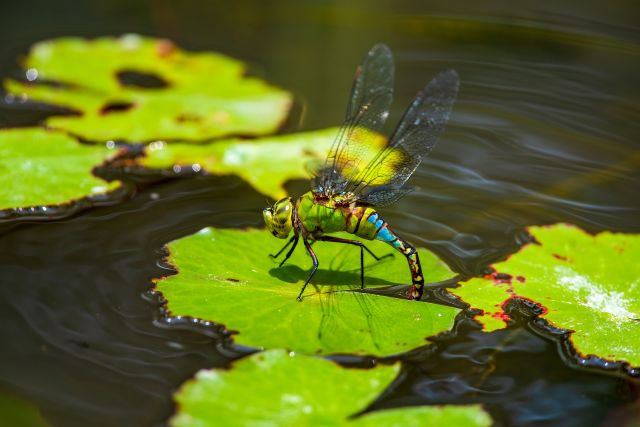
Dragonfly larva (Order Odonata)
What it looks like: Stocky and six-legged, with a distinctive hinged jaw (labium) that extends rapidly to capture prey. Olive-brown and cryptic, 15–40 mm depending on species and stage. Found in bottom sediment and among aquatic vegetation.
What it means: Dragonfly larvae are voracious predators of mosquito larvae, midges, and smaller invertebrates. Their presence signals a balanced, functioning ecosystem. They tolerate moderate environmental variation, making them a reliable mid-range indicator of healthy pond conditions.
Water boatman (Family Corixidae)
What it looks like: Oval-shaped, 5-12 mm, with distinctive oar-shaped hind legs used for swimming. Often seen carrying a bubble of air beneath the water surface. Active swimmers found throughout the water column.
What it means: Water boatmen feed on algae and microorganisms and are present in most healthy ponds. They tolerate a moderate range of conditions, so their presence alone is not diagnostic but their absence alongside other tolerant species can indicate a problem.
Pollution-tolerant species: warning signs
These species are adapted to survive in low-oxygen, high-nutrient conditions. A few individuals are normal in any pond. Dense populations, particularly in the absence of clean-water indicators, signal degraded water quality.
Tubificid worm – sludge worm (Family Tubificidae)
What it looks like: Thread-like, bright red from hemoglobin, typically 20-40 mm. Found waving from the surface of fine bottom sediment (muck) in dense clusters. The red color is the easiest field identification characteristic.
What it means: Tubificids are red because they need hemoglobin to extract oxygen from severely depleted water. Dense mats in your pond’s muck layer are a direct indicator of low dissolved oxygen, high organic loading, and elevated nutrient concentrations, the same conditions that fuel persistent algae blooms.
Chironomid midge larva – bloodworm (Family Chironomidae)
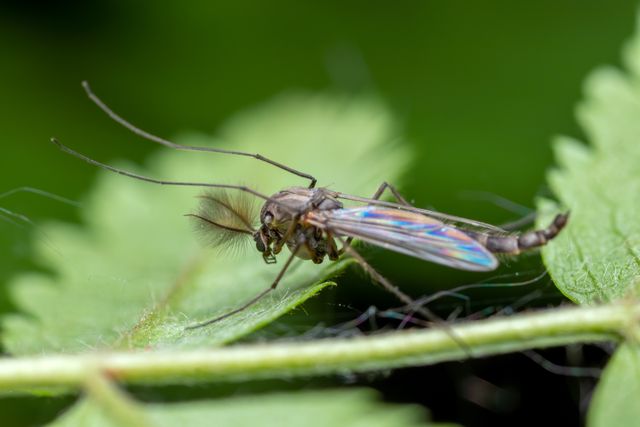
What it looks like: Reddish, segmented, 10-20 mm, with a small head capsule. Found in bottom sediment and leaf packs. Adults emerge as the non-biting midges that swarm near pond-side lighting on summer evenings.
What it means: A few chironomid larvae are normal and ecologically useful. They process organic matter and serve as fish food. Large populations concentrated in fine sediment indicate elevated organic matter and nutrient loading. Dense summer midge swarms near a pond are often the above-water signal of a chironomid population problem below.
Field tip from Jim Kennedy, National Pond Service: Use a white plastic tray and a kitchen sieve. Scoop bottom sediment from the shallows, one or two scoops at the pond edge and one from slightly deeper water. Rinse gently and spread the contents in the tray. Wait 30 seconds. Movement reveals what is there. Take photos. If your sample is dominated by red worms with few or no clean-water species present, call us before reaching for a chemical treatment.
What Chemical Algaecide Treatments Actually Do to Pond Invertebrates
Most algaecide labels describe the product’s effect on algae. They rarely describe its effect on the rest of the pond ecosystem. For the responsible pond owner, understanding the full picture is necessary before treating because the collateral damage is often worse than the original problem.
Copper sulfate and invertebrate toxicity
Copper sulfate is one of the most widely used pond algaecides. It is effective at killing algae. It is also acutely toxic to aquatic invertebrates at the same concentrations used in pond treatments.
A copper sulfate application at label rates will typically:
- Kill Daphnia and zooplankton populations within 24-48 hours, eliminating the primary grazer that keeps algae in check naturally
- Severely reduce or eliminate mayfly nymphs and other EPT taxa (Ephemeroptera, Plecoptera, Trichoptera), which are among the most copper-sensitive invertebrates in freshwater toxicology
- Disrupt beneficial bacteria colonies responsible for decomposing bottom muck and cycling nutrients through the sediment
- Leave pollution-tolerant species such as tubificids and chironomids as the dominant survivors, producing exactly the community profile that indicates poor water quality
The dissolved oxygen crash that follows
When algae dies en masse after a chemical treatment, it sinks to the bottom and begins decomposing rapidly. Decomposition consumes dissolved oxygen. The same pond that had an algae problem now has a dissolved oxygen crash which is sometimes severe enough to cause fish kills.
The oxygen-sensitive clean-water invertebrates that survived the initial copper exposure are often finished off by this secondary hypoxic event.
The rebound cycle
With Daphnia populations eliminated, there is no natural grazing pressure on the algae as it regrows. In the absence of the organisms that kept the water clear, algae rebounds faster and denser than it was before treatment, typically within four to eight weeks.
This is why pond owners using chemical-only approaches find themselves treating repeatedly, at increasing cost, without resolving the underlying problem. The treatment cycle itself perpetuates the conditions it was meant to fix.
When Chemical Treatment is the Right Choice
This is not an argument against all chemical pond treatment. There are situations where it is appropriate and necessary.
Confirmed cyanobacteria (blue-green algae) with toxin presence is a public health concern that warrants prompt, professionally applied treatment. Invasive aquatic plants such as Eurasian watermilfoil or fanwort may require EPA-registered herbicide as part of a management plan. In these cases, a targeted chemical application combined with follow-up nutrient management and biological tools is part of responsible pond care.
The critical distinction is between chemical treatment as part of a plan and chemical treatment as a substitute for one.
At National Pond Service, we conduct a water quality assessment and invertebrate observation before recommending any treatment pathway. If your pond’s invertebrate community is still relatively intact, protecting it is almost always more valuable than a chemical application that degrades it.
Not Sure What is Living in Your Pond?
A water quality and biotic assessment from National Pond Service gives you the complete picture, including an invertebrate community profile, nutrient levels, dissolved oxygen, and a treatment recomm
endation that accounts for the ecosystem you have built. We serve pond owners throughout Upstate and Western New York.
Contact National Pond Service to schedule an assessment before the summer algae season peaks.